Is a functioning miniature the size of a coin considered a real weapon? How can you find the right Ring gun size without visiting a jeweler, why should you never disassemble the cylinder down to the tiniest screw, and how far do these micro-mechanisms actually shoot? W.Polah founder Olga Polah shares her hands-on experience, debunks common myths, and answers collectors’ most intriguing questions about engineering artistry, safety culture, and caring for miniature masterpieces.
The Era of Jewelry Firepower
When I first started crafting miniature firearms, I believed all the magic lived strictly inside the workshop — under a magnifying glass, among millimeter-sized springs and raw brass blanks. Over the years, however, I realized that just as much joy comes from talking with you: the people who hold these pieces in your hands and see not merely metal, but living engineering history.
Every day, my inbox fills up with messages from collectors across the globe. These are never dry customer-service inquiries; they are genuine conversations among kindred spirits. Today, I have gathered your most fascinating questions — ranging from philosophical reflections on the nature of miniatures to very practical nuances regarding our Ring guns. Settle in, and let us have a candid conversation about our shared passion.
Art or Weaponry: Where Do We Draw the Line?
Subscriber’s Question: “Is miniature weaponry actually a form of weaponry or a form of art?”
Olga’s Answer:
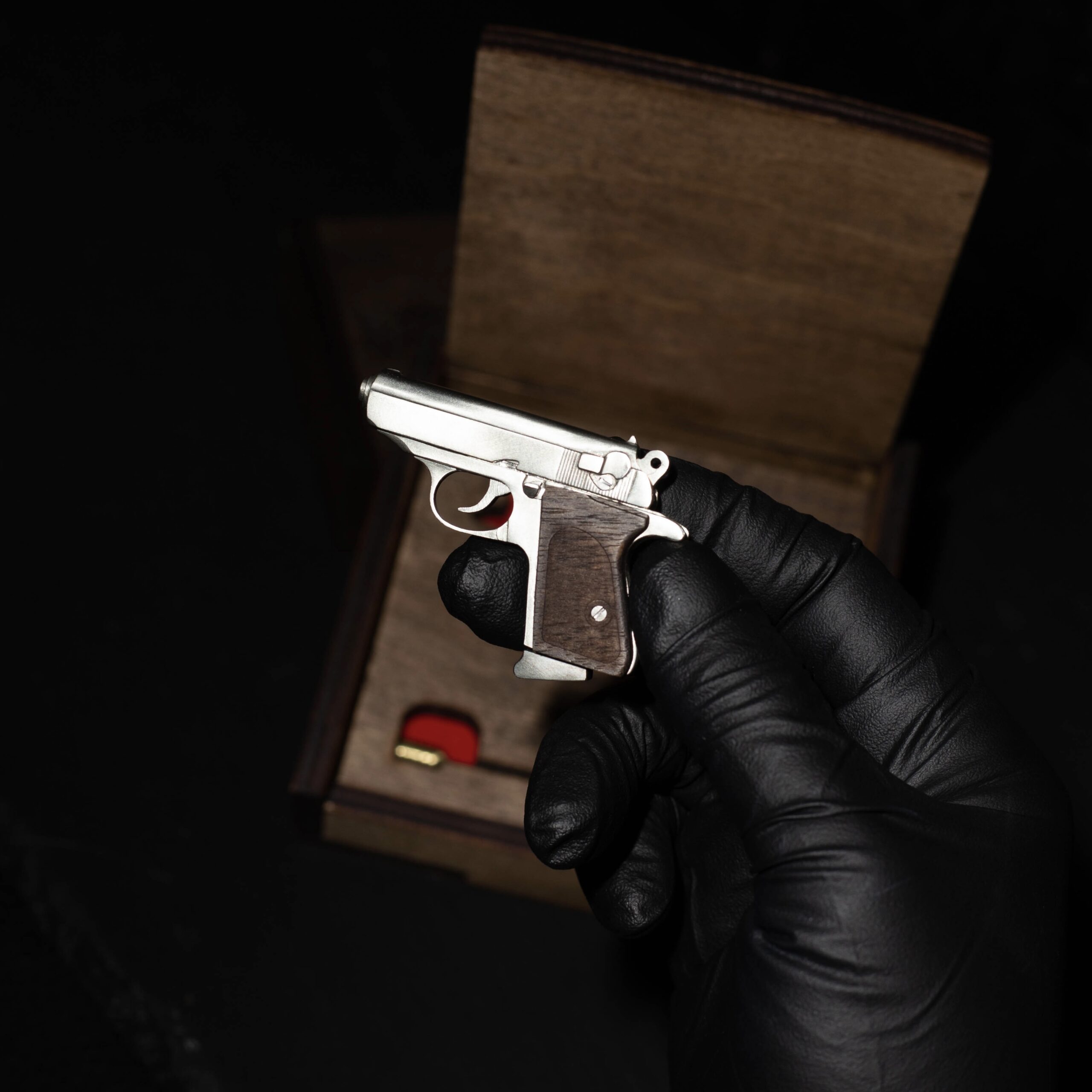
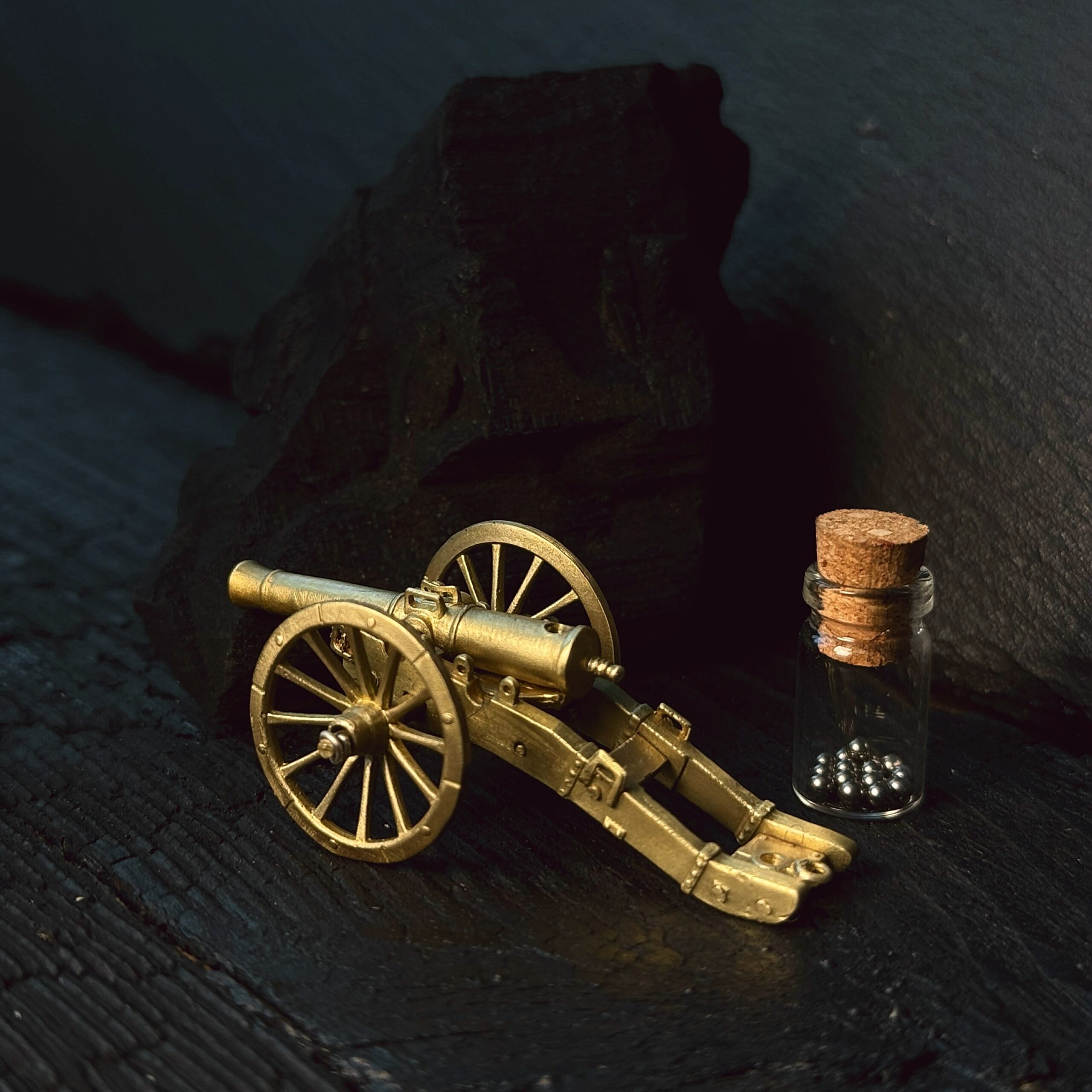
The history of miniature arms stretches back centuries. As early as the Renaissance, European gunsmiths forged tiny, working replicas of pistols and cannons as their chef-d’œuvre — masterpiece graduation exams proving they deserved entry into a master guild. Back then, just as today, the goal was never combat; it was demonstrating the absolute pinnacle of metalworking skill.
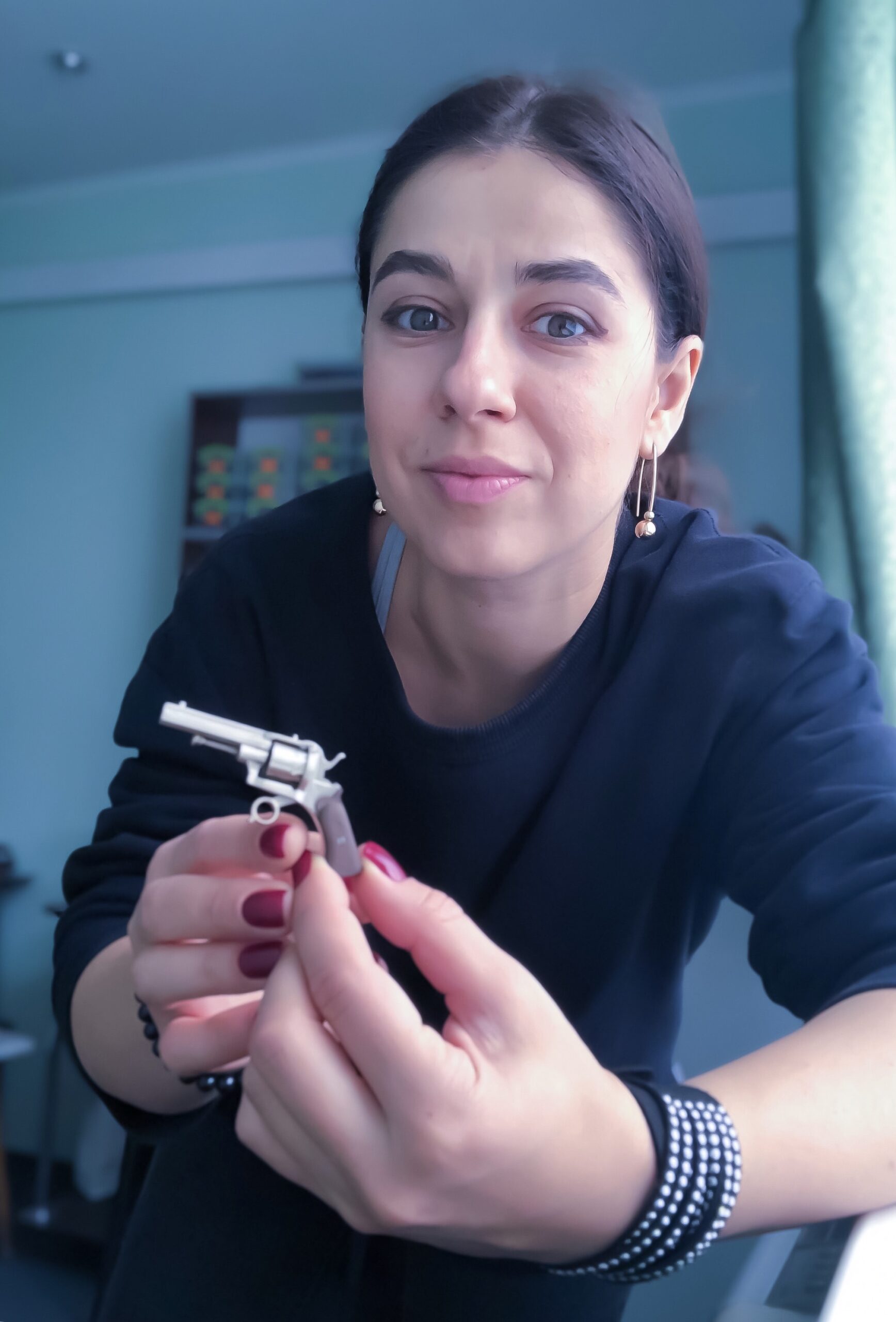
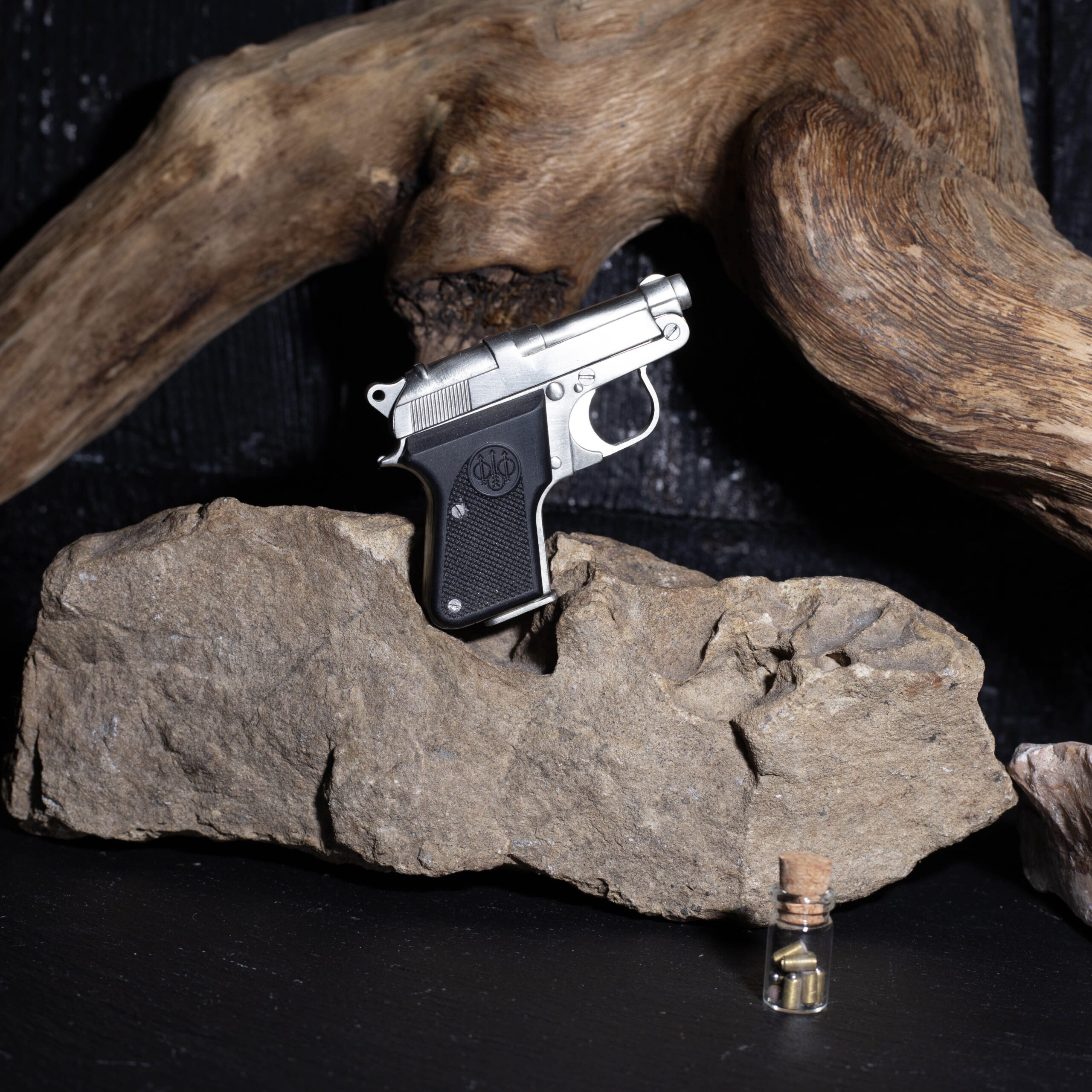
That is why my answer is unequivocal: my miniatures are only structurally similar to real weapons, yet they are not weapons. I create them strictly as a form of engineering and jewelry art — for collectible, recreational, educational, and decorative exhibition purposes.
If we step away from romance and look at strict legal classification criteria across different countries, our pieces fall firmly into the non-weapon category:
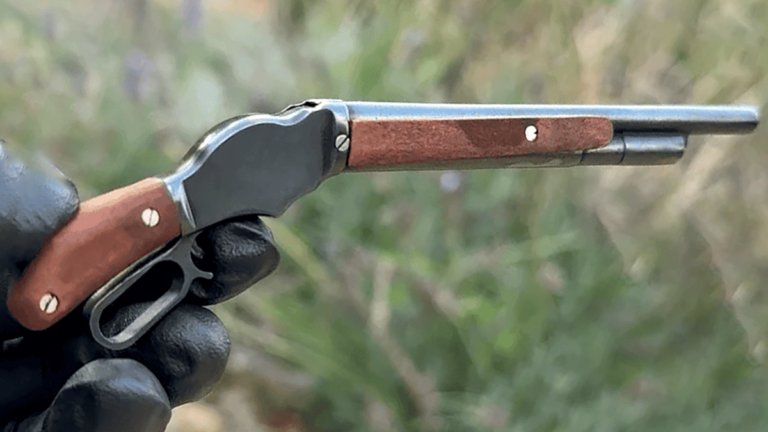
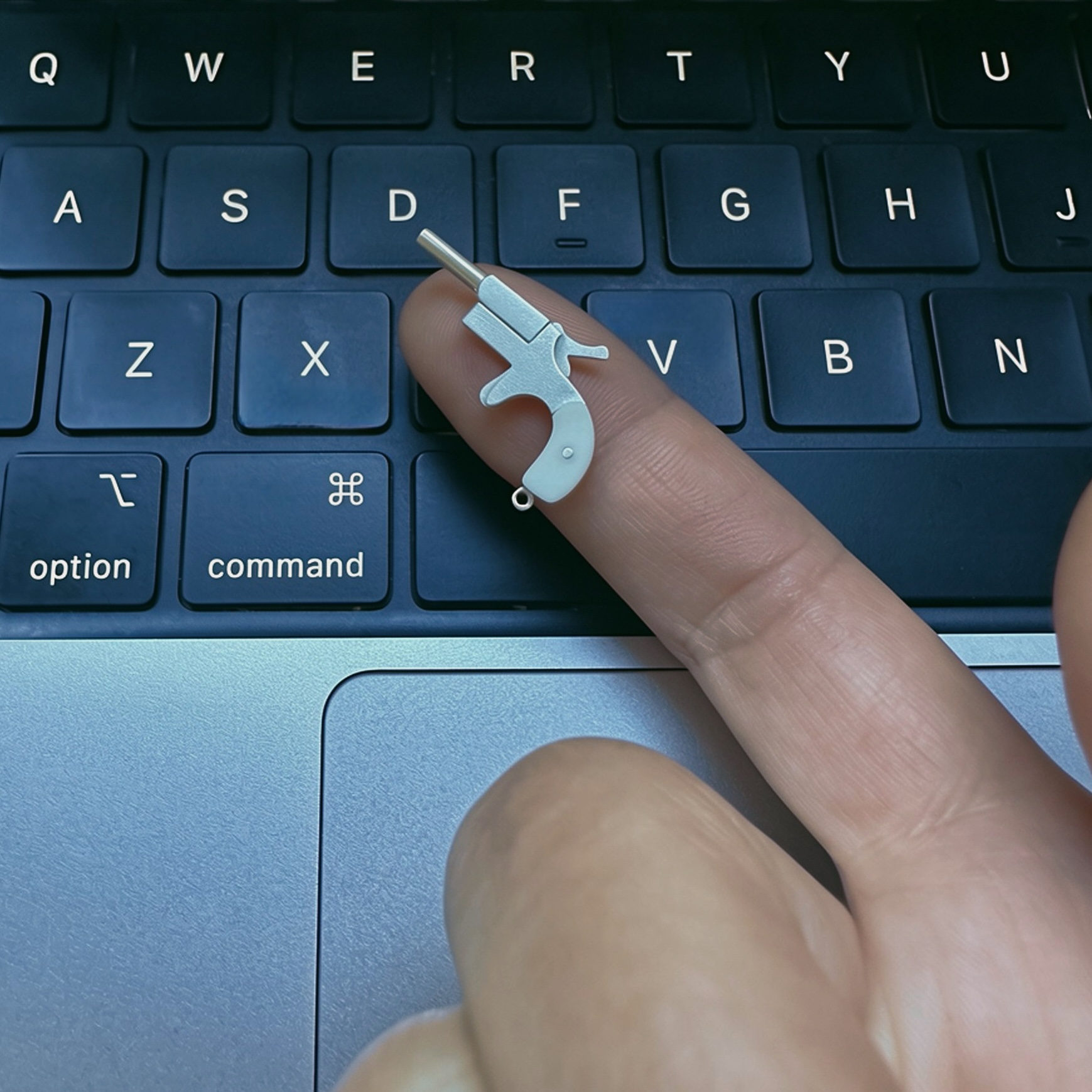
- Dimensions. My pieces generally stay within 1.50 × 2.76 inches (38 × 70 mm).
- Visual Marking. When required, they can be complemented with an orange plug to clearly indicate that the item is not a firearm.
- Kinetic Energy. The miniatures operate with kinetic energy below 1 J (and specific energy below 0.5 J). This is the technical threshold guaranteeing that a miniature cannot cause penetrating injuries.
Why Miniatures Cannot Be Used for Self-Defense
Subscriber’s Question: “Why cannot miniature weapons be used for self-defense?”
Olga’s Answer:
In the 19th century, pocket derringers and tiny “last-chance” revolvers tucked into a waistcoat pocket or sleeve certainly existed. Modern collectible miniatures, however, belong to an entirely different philosophy where aesthetics have completely replaced utility.
This question naturally arises because of the striking realism of my pieces, yet it is vital to separate practical function from fine art. First, the very essence of luxury collectibles is the opposite of utilitarian deployment; these objects are meant for contemplation and enjoyment, not for resolving conflicts. Second, miniatures possess zero stopping power, as they are engineered to showcase precision craftsmanship rather than exert physical force. Third, operating micro-mechanics demands calm patience and steady concentration, which is completely incompatible with an emergency. In a real confrontation, pulling out a miniature would at best leave an attacker deeply puzzled — hardly a tactical advantage anyone should rely on.
Ring Gun Revolver
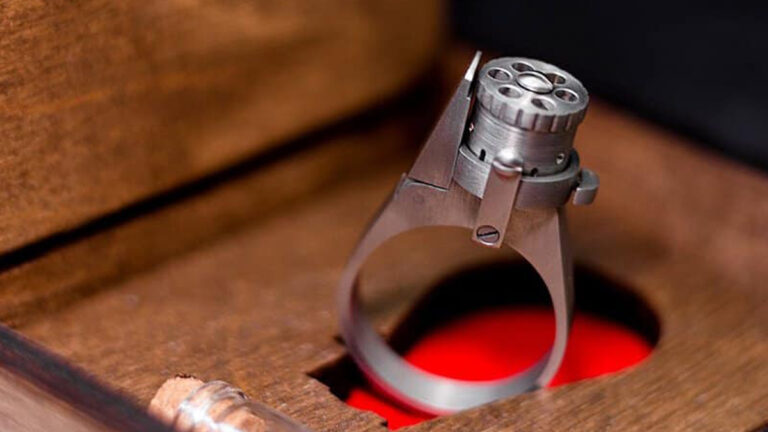
This isn’t just a static piece of jewelry that mimics a gun shape. It is a fully working, mechanical 6-shot cylinder revolver. When I say it’s a masterpiece of engineering, I mean every single part moves, locks, and operates exactly like its full-scale ancestors. It is, quite literally, the smallest working gun you can proudly wear.
Pinpoint Accuracy: What Can Two Millimeters Actually Do?
Subscriber’s Question: “How far can a miniature shoot?“
Olga’s Answer:
In classical ballistics, barrel length directly governs projectile stability. At first glance, what could one possibly expect from a barrel measuring just a couple of centimeters? Yet the laws of physics remain remarkably faithful even at a 1:3 or 1:6 scale, provided the bore geometry is machined without compromise.
In my videos, I usually demonstrate shooting from a distance of up to one meter so the camera can capture every mechanical detail clearly. In reality, the capabilities of my pieces reach much further:
- Precision shooting with the mechanisms I assemble is achievable at a distance of 3 to 4 meters.
- Such range speaks directly to the tight tolerances of the fitted components; my work is not merely about external realism, it is a reliable, functioning mechanism.
- Even during recreational target practice, I always encourage treating miniatures with the exact same respect practiced by professional shooters. Doing so nurtures a healthy culture of responsible handling.
The Legendary Ring Gun: Hunting for Elusive Ammunition
Subscriber’s Question: “I have a Le Petit gun ring with 6 slots and need 4mm ammo — do you have it?”
Olga’s Answer:
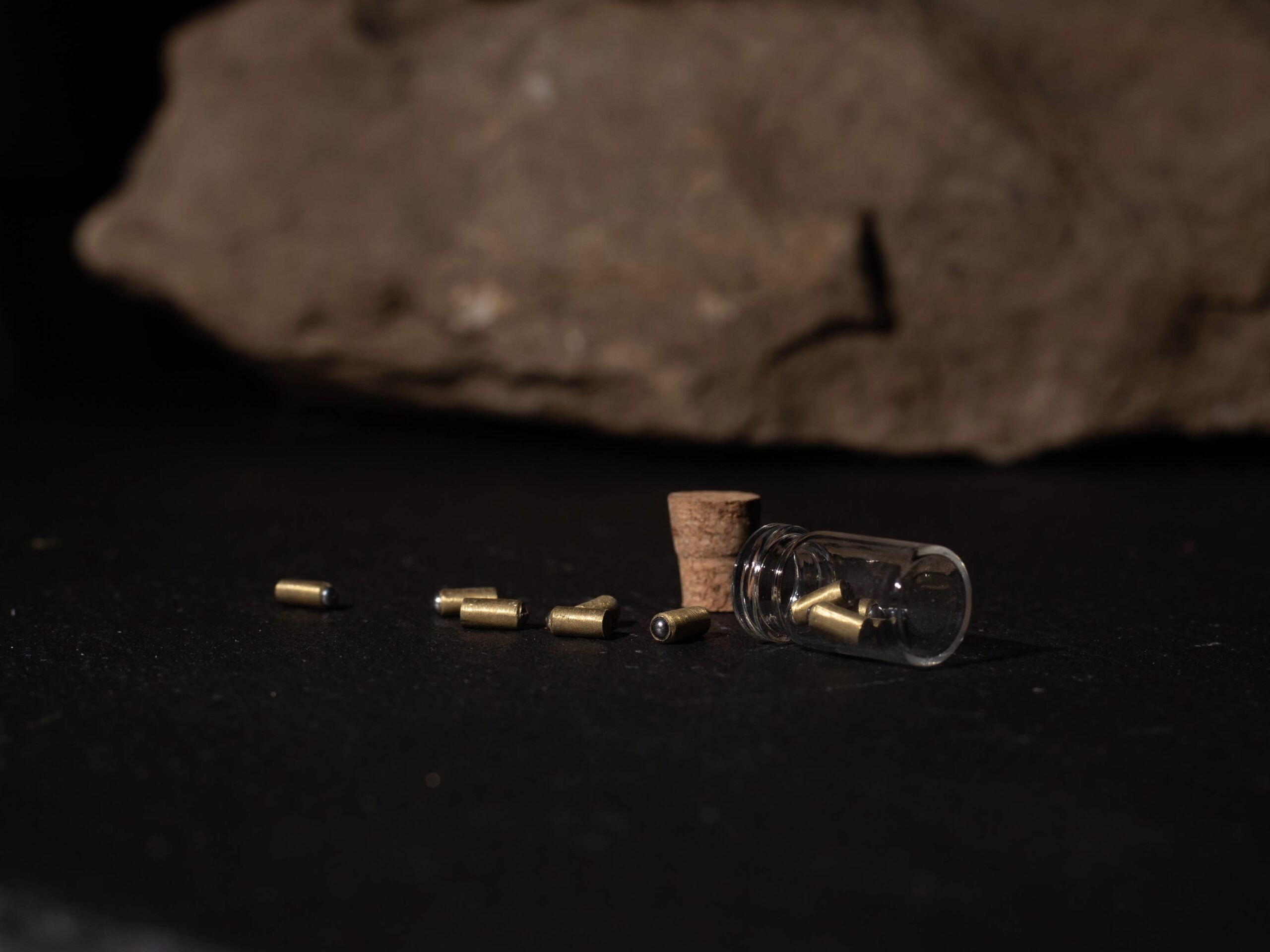
Ring revolvers — famously known in 19th-century Europe as Les Petits Protecteurs or “femme fatale rings” — represent a captivating, almost detective-like chapter in firearms history. Back in those days, global ammunition standardization simply did not exist: every workshop invented its own proprietary caliber, rifling pitch, and casing profile to keep buyers loyal to their own bench.
That is precisely why owners of antique or third-party models reach out to me from time to time searching for cartridges. The only scenario where I can still help is with 2mm pinfire cartridges, as a more or less universal standard exists for them. For every other miniature caliber, no clear standard was ever established. Reproducing such ammunition today based solely on the outer diameter of a casing is simply impossible. If an antique Le Petit ever landed in my own collection, the very first place I would scour for ammunition would be eBay.
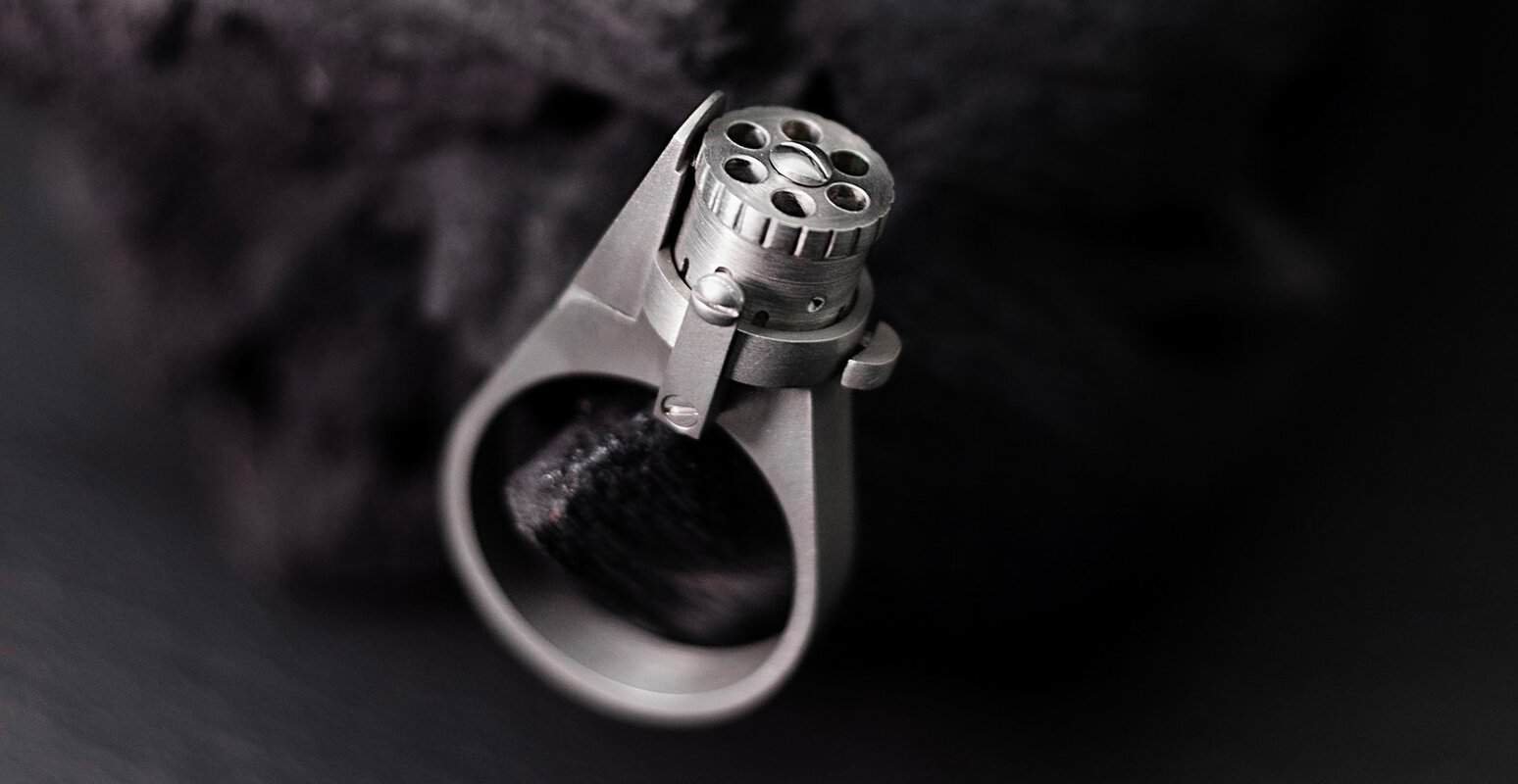
Anatomy of a Ring Gun: How Not to Turn a Masterpiece into a Jigsaw Puzzle
Subscriber’s Question: “To take off the cylinder on the ring, do you just unscrew the top and pull it off? I didn’t know if you have to do anything with the side screw…”
Olga’s Answer:
Every watchmaker and fine mechanic lives by one golden rule: never disturb a sub-assembly that is already running smoothly. Inside a miniature revolver, each screw serves a distinct structural purpose — some bear mechanical load, while others anchor hair-thin springs inside the trigger group.
There is absolutely no need to touch the side screw on the Ring gun. To remove the cylinder, load it, and return it to its seat, only the top screw holding the cylinder needs to be unscrewed. Everything works exactly as shown in our step-by-step guide and video tutorial.
Lately, we have started including a spare large screw with every Ring gun because quite a few collectors have managed to misplace theirs. That is also why I strongly advise against disassembling the miniature or loosening the smaller screws. Trust my workshop experience: the odds of turning your collectible into a pile of weightless specks — followed by an evening crawling across the carpet with a flashlight and a magnet — are remarkably high.
A Bespoke Fit: Ordering a Ring Gun Without Visiting a Jeweler
Subscriber’s Question: “I want a Ring gun, but I don’t know my ring size.”
Olga’s Answer:
Jewelry-grade ergonomics matter just as much in a ring firearm as they do in a wedding band. The ring must sit securely on your finger without twisting when you cock the hammer, yet never pinch the skin. Years ago, people bought this model in a single standard size simply as a cabinet curio. Over time, however, I got my clients accustomed to bespoke sizing, and today we craft each piece to individual measurements — my workshop archive already spans US sizes 7 through 16.
If exact sizing is not critical for you, I can assemble a Ring gun from spare parts already finished on my bench, which significantly shortens your waiting time. If you plan to wear it with tailored comfort, you can measure your finger at home in under a minute without stepping foot inside a jewelry store:
- Wrap a simple piece of thread comfortably around the index finger of your left hand.
- Mark the exact point where the thread overlaps using a fine marker.
- Lay the thread flat and measure the length in millimeters with a ruler.
Simply send me that millimeter figure in reply to your order email, and I will personally calculate the exact inner diameter for your ring.
Ring Gun Revolver
This isn’t just a static piece of jewelry that mimics a gun shape. It is a fully working, mechanical 6-shot cylinder revolver. When I say it’s a masterpiece of engineering, I mean every single part moves, locks, and operates exactly like its full-scale ancestors. It is, quite literally, the smallest working gun you can proudly wear.
Closing Thoughts
It always warms my heart to see the curiosity, respect, and passion you bring to these tiny mechanisms. Every question you send pushes me to refine W.Polah creations even further and make our guides clearer for fellow enthusiasts. Never hesitate to write, share your impressions, or send over new questions — I will gladly answer them in future editions of our blog!