There’s a saying I’ve always loved: God created men, but Colonel Colt made them equal.
That instinct is something I understand deeply. Every miniature I create at W.POLAH is, in its own way, a meditation on that same drive — the healthy aggression that lives in all of us. Not the kind that destroys, but the kind that keeps us alive, keeps us sharp, keeps us human. A reminder that tension, properly channelled, becomes energy. And energy, properly directed, becomes life.
That’s why the W.POLAH lineup includes so many miniatures inspired by the legendary models of Colt’s Manufacturing Company. No other manufacturer has shaped the story of the firearm — and by extension, the story of human civilization — quite like Colt...
The Gun That Won the West: Colt Peacemaker
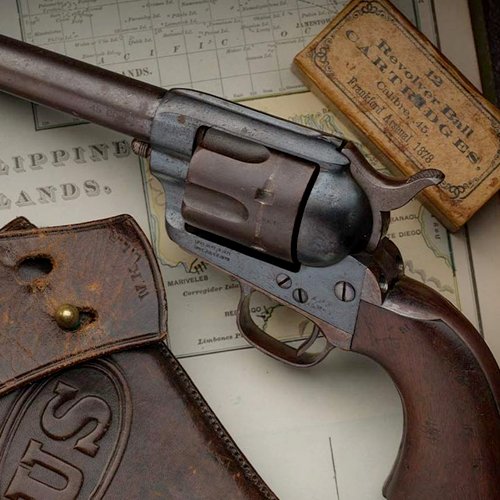
Few firearms have earned a name as fitting as the Colt Single Action Army revolver of 1873 — the gun the world came to know simply as the Peacemaker. Designed by William Mason and Charles Brinckerhoff Richards, it was adopted by the U.S. Army as its standard service revolver and went on to become one of the most recognizable handguns in human history. With its clean lines, single-action mechanism, and unmistakable silhouette, it was a weapon that demanded respect — and got it.
But the Peacemaker’s true legend was forged not only on battlefields and frontier trails. It became the soul of an era. The open range, the cattle drives, the dusty main streets of frontier towns — the Colt 1873 was present for all of it. Lawmen like Wyatt Earp and outlaws like Billy the Kid both carried it. That duality — law and chaos, order and wildness — is part of what makes this revolver so endlessly fascinating. It didn’t just shape the American West. It shaped the mythology we still tell about it.
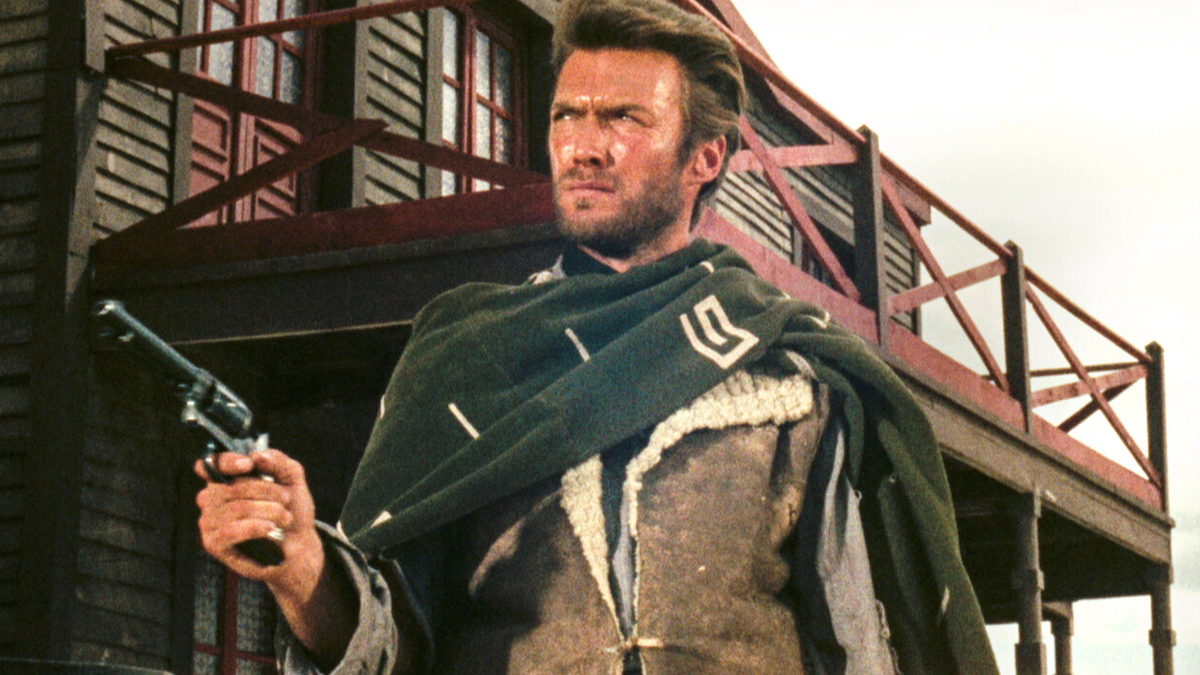
And then Hollywood took over. From the golden age of westerns to the gritty revisionism of Sergio Leone, the Peacemaker’s profile became inseparable from the idea of the lone gunfighter. There is perhaps no other firearm so deeply embedded in both history and cinema.
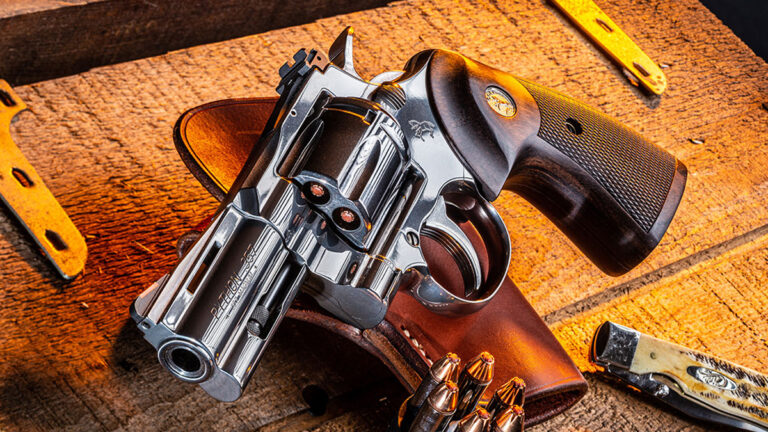
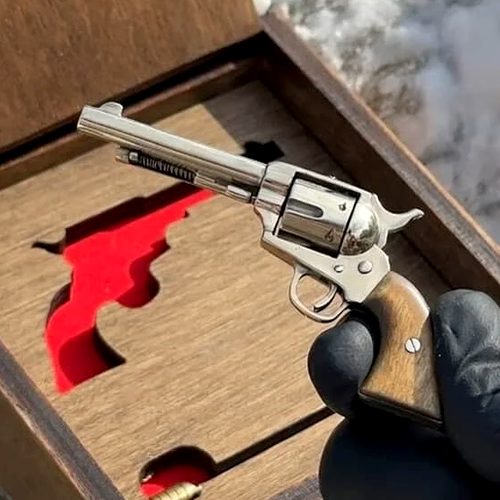
When I decided to recreate the Peacemaker in miniature, I knew I had to honour that legacy — every curve, every detail. The W.POLAH version is a fully functional Colt 1873 Peacemaker revolver at 1:4 scale, crafted entirely by hand. I produce it in a polished finish with glossy wooden grips — because this is a gun that deserves to look the part. But if you have your own vision, customization is always possible.
The miniature fires 2mm cartridges and comes with a 6-shot cylinder — just like the original. And I’ll tell you honestly: there is something incredibly satisfying about rotating that cylinder and taking shot after shot. The mechanism is real, the feel is real, and the thrill — even at 1:4 scale — is absolutely real.
A Century of Trust: The Colt 1911
If the Peacemaker belongs to the mythology of the frontier, then the Colt 1911 belongs to something even more enduring — the mythology of absolute reliability. Designed by the incomparable John Moses Browning and adopted by the U.S. military in 1911, this semi-automatic pistol served as the standard-issue sidearm of the American armed forces for over seventy years. That is not a record — that is a statement.
The 1911 was born out of necessity. The Spanish-American War had exposed the inadequacy of existing revolvers in close combat, and the U.S. Army launched a rigorous search for something better. Browning’s design won not just the competition, but the loyalty of generations of soldiers. It went to war in the trenches of World War I, stormed the beaches of Normandy, fought through Korea and Vietnam, and remained in active service well into the 1980s. Few mechanical objects in history have earned that kind of trust across that many conflicts.
What made the 1911 so exceptional was the combination of stopping power, ergonomics, and mechanical simplicity. The .45 ACP cartridge it was chambered for hit hard and hit decisively. The single-action trigger offered a clean, consistent pull. And the overall architecture of the pistol — angled grip, thumb safety, beaver tail — felt so natural in the hand that many shooters still consider it the gold standard of pistol design to this day. Countless manufacturers have built their own variations upon Browning’s original blueprint, and the 1911-pattern pistol remains one of the most produced handgun designs in history.
Its cultural footprint is just as vast. The 1911 is the pistol of American war films, of hardboiled detectives, of presidents and generals. It carries with it a sense of authority that few other firearms can match.
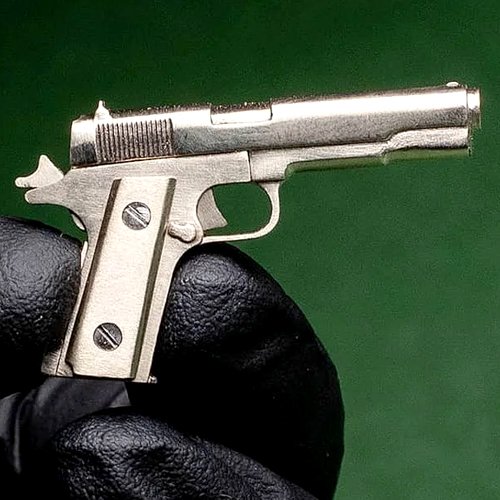
At W.POLAH, the Colt 1911 comes in several scales and finishes — because a legend this significant deserves more than one interpretation. But I want to tell you about this particular version: the 2mm pinfire Colt 1911 at 1:6 scale, and it is absolutely stunning.
The entire model is made of metal — every detail faithfully reproduced, every proportion carefully balanced. At just 37 × 23 mm and 9 grams, it fits in the palm of your hand and yet somehow fills the room with presence. The hammer cocks, the trigger pulls, and the shot fires — a real 2mm pinfire cartridge, with a realistic crack that never fails to impress.
That combination of compact size and surprisingly powerful shot never leaves anyone indifferent. I know this from experience — I’ve watched it happen with every person who picks one up for the first time. If you prefer, it can also be configured as a keychain, so the legend travels with you everywhere.
Born from Controversy, Built for History: The M16 Rifle
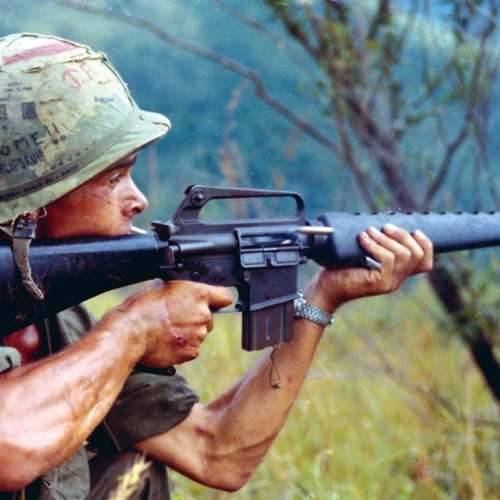
The story of the M16 begins not with triumph, but with argument. When Eugene Stoner designed the AR-15 in the late 1950s for ArmaLite, few could have predicted that this lightweight, polymer-stocked, gas-operated rifle would go on to become one of the most produced and most debated military firearms ever made. Colt’s Manufacturing Company acquired the rights to the design, refined it, and delivered what the U.S. military would adopt in 1964 as the M16 — the standard-issue rifle that would define American infantry for decades.
The timing was everything. Vietnam was escalating, and the military urgently needed something lighter and faster than the heavy M14. The M16 delivered: weighing under seven pounds, firing the small-calibre 5.56×45mm round at high velocity, it allowed soldiers to carry more ammunition and engage targets with greater speed. But its early deployment was turbulent. Initial versions suffered reliability problems in the humid jungle conditions of Southeast Asia, leading to reforms in training, maintenance, and the rifle’s own design. The lessons were hard-learned — and the result was a weapon that steadily earned the trust of the soldiers who carried it.
Over the following half-century, the M16 and its civilian sibling the AR-15 became among the most recognizable firearms on the planet. They served in every major American military engagement from Vietnam through Iraq and Afghanistan, evolved through generations of variants, and spawned an entire culture of customization and modification that continues to this day. The straight-line stock, the carrying handle, the distinctive muzzle flash hider — these silhouettes are burned into the visual memory of anyone who has ever watched a war film or picked up a news magazine.
Its cultural presence is equally impossible to ignore. The M16 is the rifle of the Vietnam era, of Full Metal Jacket and Apocalypse Now, of every news photograph from decades of conflict. It carries weight — literally and symbolically.
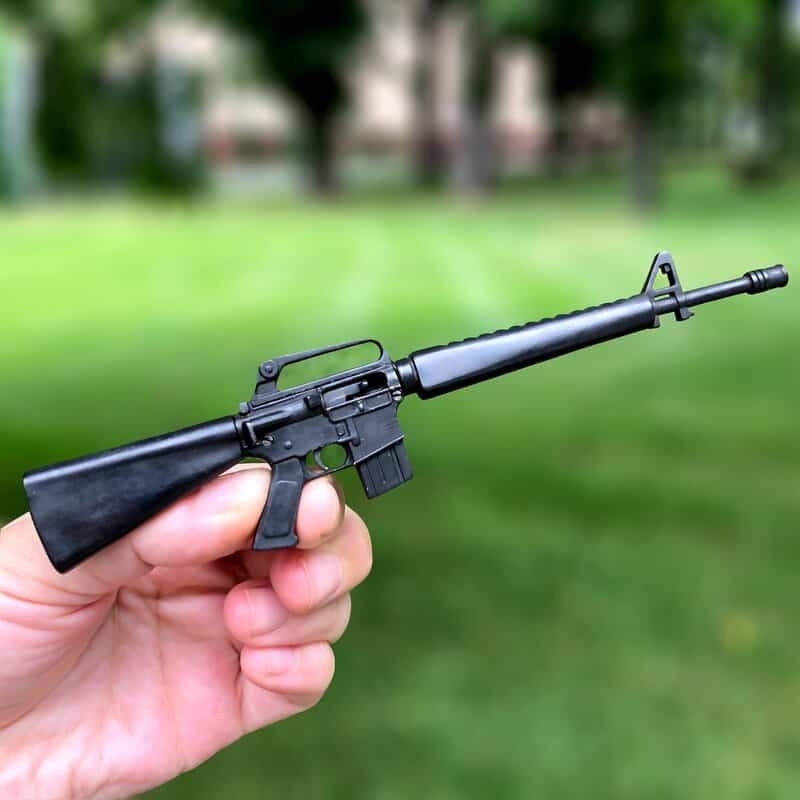
The M16 rifles, which were also developed by Colt, did not escape my attention when I created the W.POLAH line of miniature weapons. A design this significant deserved a place in the collection — and I’m proud that it has one.
The W.POLAH M16 miniature is crafted entirely from metal at 1:6 scale, measuring 6.57 × 1.46 inches — impressive even in miniature. Every moving part that defines the original is faithfully reproduced: the bolt, the trigger, the stock. It is a fully functional model, firing real 2mm cartridges, and the attention to proportion and detail is something I take particular pride in. This is not a toy — it is a handmade military model for serious collectors.