
Get the Collector's Edge
Subscribe for exclusive, behind-the-scenes access to our workshop. Discover the creation of new models and receive subscriber-only best deals.
Subscribe for exclusive, behind-the-scenes access to our workshop. Discover the creation of new models and receive subscriber-only best deals.
Subscribe for exclusive, behind-the-scenes access to our workshop. Discover the creation of new models and receive subscriber-only best deals.
Fully Functional Miniature Weapon Models Crafted with Exceptional Quality and a Lifetime Service Guarantee
What is the first thing that comes to your mind when you hear submachine gun?
For me – it’s the spectacular scenes of dual firing with two UZIs or two Scorpion sub guns. Just like Neo’s shooting scene in the lobby from The Matrix.
In the 1950s-70s of the twentieth century, there was a clear demand for exactly such reliable and compact submachine guns. This was driven by the aftermath of World War II, the intensifying confrontation between the socialist and capitalist blocs, and numerous local conflicts where fighting had to be conducted in dense urban areas, jungles, deserts, by guerrilla units or special forces. That is why during this period the most compact versions of submachine guns in all of history were born.
Well, I wouldn’t be myself if I didn’t make miniature versions of an already compact weapon.
The story of the Uzi is a testament to necessity and ingenuity. In the late 1940s, the newly formed state of Israel faced a critical shortage of weapons, leading a young Lieutenant, Uziel Gal, to design something that could survive the grit of the desert while remaining easy to manufacture. He didn’t just build a gun; he redefined the architecture of a submachine gun.
By utilizing a “telescoping bolt” design—where the bolt wraps around the breech of the barrel—Gal managed to significantly reduce the weapon’s overall length without sacrificing its power.
It was short, it was punchy, and it was incredibly reliable. For the Israeli paratroopers and special forces who first carried it into the heat of the 1956 Sinai Campaign, the Uzi wasn’t just equipment; it was the ultimate tool for survival in tight spaces. When I work on the miniature version, I find myself marvelling at that very compactness, realizing that even in full size, the Uzi was always striving to be as small as possible.
If the Uzi is a rugged desert fighter, the Škorpion vz. 61 is a piece of precision engineering designed for the shadows of the Cold War. Developed by Miroslav Rybář, it was intended for tank crews, drivers, and special operations units who needed more than a pistol but less than a bulky rifle.
The name “Škorpion” comes from its signature folding wire stock, which swings over the top of the receiver like a scorpion’s tail ready to strike. It’s a fascinating piece of machinery because of its unique rate-of-fire reducer hidden in the grip, which prevents the weapon from emptying its magazine in a mere heartbeat. Holding a miniature Škorpion in your hands, you truly appreciate the elegance of its silhouette—a perfect blend of Eastern Bloc pragmatism and surprisingly sophisticated aesthetics.
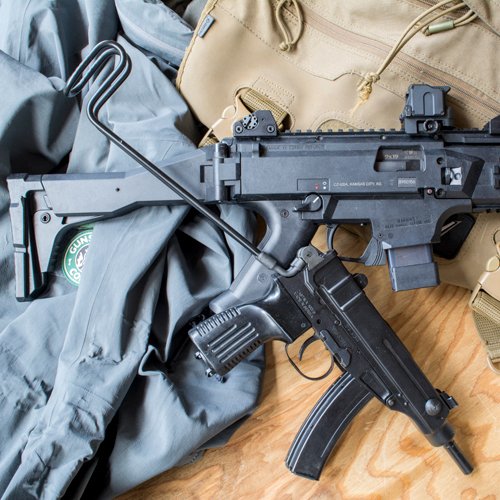
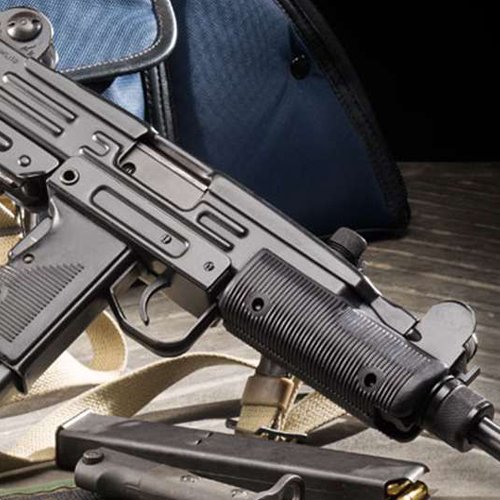
Both the Uzi and the Škorpion fundamentally changed how we think about “Close Quarters Combat” (CQC). Before these icons arrived, a compact weapon often meant a compromise in reliability or firepower, yet these two proved that you could carry immense stopping power in a package that fits inside a coat or a cramped pilot’s cockpit. They became the gold standard for VIP protection and urban intervention. Whether it was the Secret Service protecting a president or a commando unit clearing a room, the sheer volume of fire and the ease of maneuverability made them indispensable for the high-stakes reality of 20th-century warfare.
There is a specific kind of magic that happens when a functional tool becomes a cultural icon. The Uzi and the Škorpion didn’t just stay in the hands of soldiers; they migrated into our collective imagination through the flickering light of cinema. Think back to the 80s and 90s. If a character was meant to look modern, dangerous, or perhaps a little rebellious, they were likely carrying one of these.
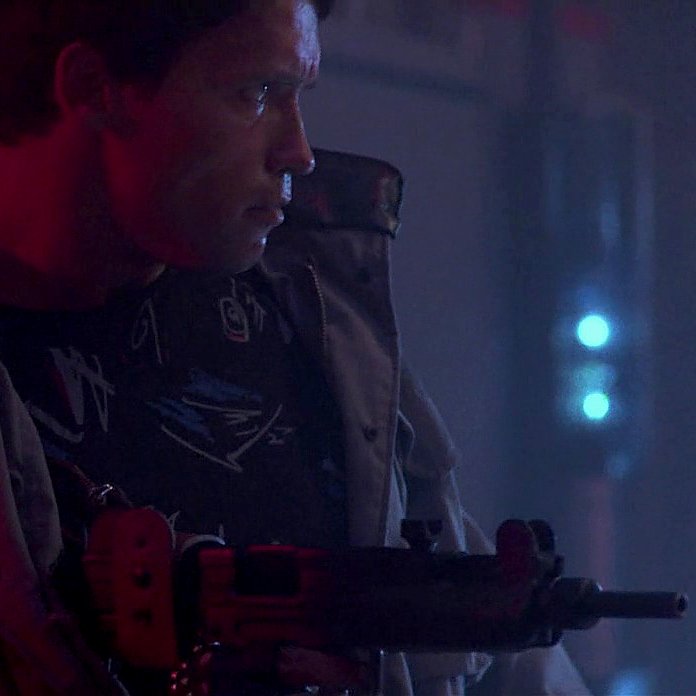
The Uzi, in particular, became the face of the Hollywood action hero. We’ve seen it everywhere—from Arnold Schwarzenegger’s relentless Terminator to the stylish, high-octane lobby scene in The Matrix. There is something inherently cinematic about the way an Uzi looks when fired in pairs. It’s a visual shorthand for power and speed.
The Škorpion, on the other hand, often carries a more mysterious, professional “spy” vibe. Whether it’s appearing in the hands of a Cold War operative or being pulled from the leather jacket of a modern-day assassin like the Winter Soldier, its silhouette is unmistakable. These weapons have a “personality” that transcends their steel and springs; they represent an era of action where the hero—or the villain—needed to be fast, mobile, and undeniably cool.
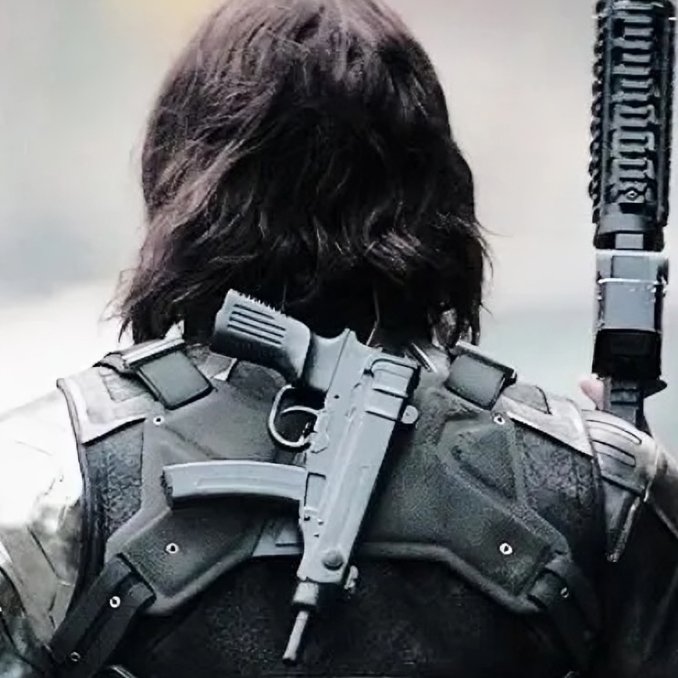
I’ve always believed that to truly understand a design, you have to recreate it. Well, I wouldn’t be myself if I didn’t make miniature versions of an already compact weapon.
There is a unique challenge in shrinking a submachine gun. When you take an Uzi—a weapon already celebrated for its efficiency—and bring it down to a 1:6 or 1:4 scale, you realize just how tight the tolerances were in the original. Every pin, every curve of the folding stock, and the texture of the grip must be perfect. If a detail is off by even a fraction of a millimeter, the “soul” of the piece vanishes.
For me, crafting these miniatures is a way of paying homage to the engineers like Uziel Gal and Miroslav Rybář. It’s about capturing that history, that cinematic flair, and that raw mechanical beauty in a form that sits in the palm of your hand.
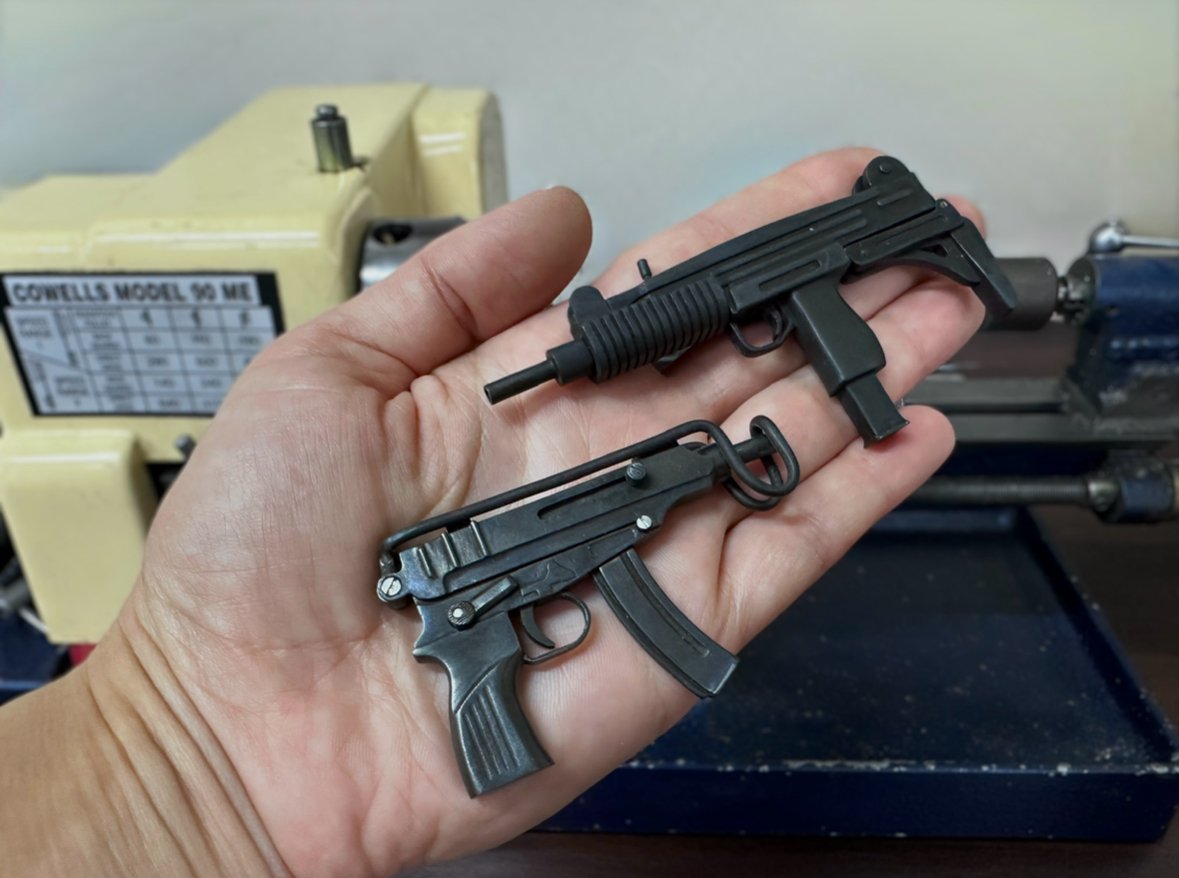
By the way, Uziel Gal, who designed the Uzi, was also inspired by the work of Czechoslovak gunsmiths. Why must the Mini Uzi definitely be in a firearms enthusiast’s collection?
Of course, because it is the most popular sub gun in the world. Moreover, it is an excellent example showcasing an interesting design feature and has a magazine that inserts into the grip, making magazine changes more convenient, even if you are frustrated or working in the dark, because holding the grip with your hand, it’s easy to locate in space where the magazine should be inserted.
Of course, I love the Scorpion not only because it suits Keanu Reeves so well. Its firing is spectacular. For me, it also embodies the principle, “if you really want it, you can.” The designers did an excellent job and managed to fit the AK trigger mechanism into such a compact size. The real Scorpion is so small that, for comfortable shooting, the Czechs teach to rest its long stock not on the shoulder, but on the cheek. Not to mention my tiny little beauty.
I hope you all have seen this video of me shooting at cans with the rounds. The mechanism of this miniature turned out to be reliable. I can wholeheartedly recommend this miniature, even as a gift or as the first piece in a collection.
Мене звати Ольга Полах, і я працюю у виробництві мініатюрної зброї з 2015 року. Я заснувала бренд мініатюрної вогнепальної зброї та з 2016 року веду Instagram-сторінку бренду. Мініатюри бренду користуються популярністю в усьому світі, маючи фанів у 25+ країнах. У 2018 році я стала єдиною власницею бренду та створила велику лінійку мініатюр. Більше 60 моделей мініатюрної зброї з різних історичних періодів було створено. У листопаді 2023 року я дала інтерв’ю Роберту Данну для журналу GunTech, де розповіла про труднощі, з якими я зіткнулася у своєму бізнесі. Також я веду інформаційний бюлетень для клієнтів бренду, який переріс у повноцінний журнал з глибокими статтями, що публікуються на wpolah.com.

Моя місія — зробити життя людей більш радісним, ділячись цікавими фактами про мініатюрну зброю та надихаючи кожного виражати себе.
